Dog harness vs collar: which is better for a dog that pulls?
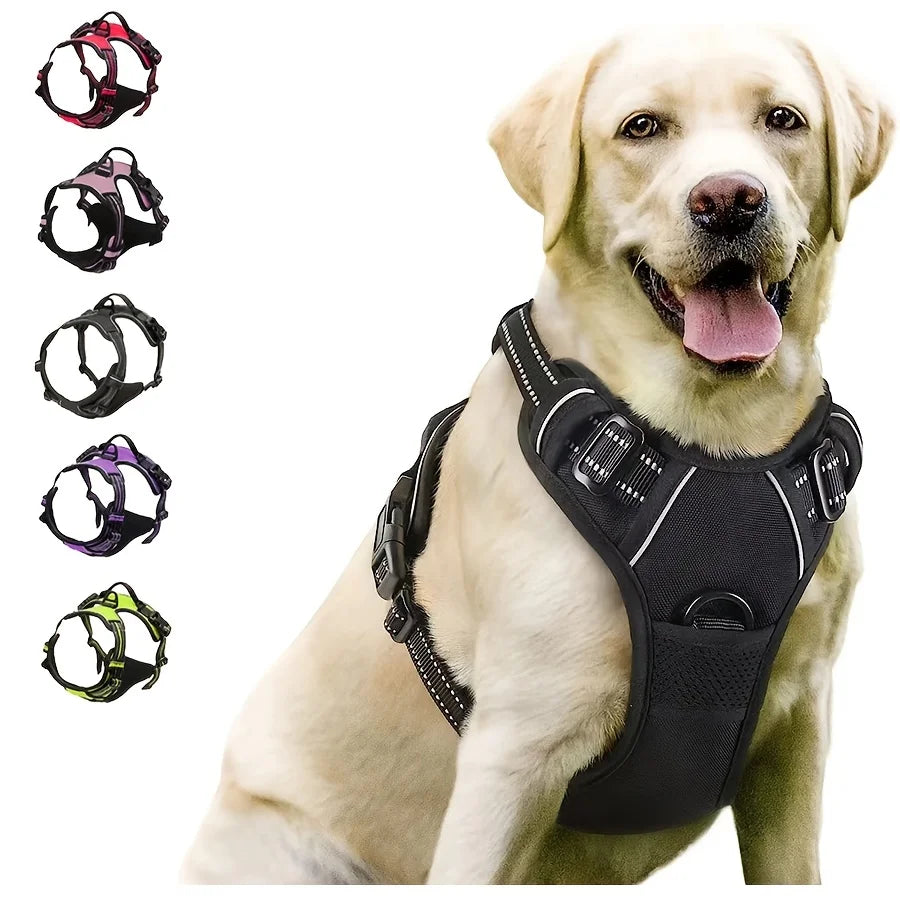
For a dog that pulls, a harness is usually the better choice. It spreads force over the chest, while a collar puts it on the neck. Neither one replaces training.
What the research says
A published study on leash pulling compared neck collars and harnesses. Its authors note that a harness spreads the force over a larger area, while a collar concentrates it on the neck.
When a collar is fine
A collar works well for holding ID tags, and for calm dogs that walk on a loose leash. If your dog rarely pulls, you may not need anything else.
When a harness makes more sense
- Your dog pulls, lunges or coughs on the collar.
- You have a small dog or a flat-faced breed.
- You want a top handle for curbs and crossings.
If your dog has a breathing or neck problem, ask your vet which option is right. PetSafe notes that a harness is the standard recommendation for dogs with a collapsing trachea.
How to fit a harness
- Measure the chest and the neck, not just the weight.
- Adjust the straps so two fingers fit underneath.
- Check that it does not rub behind the front legs.
- Make sure the buckles click shut before each walk.
Common questions
Does a no-pull harness stop pulling by itself?
No. It helps you manage the walk while you train. For a dog that lunges hard, choose a heavier-duty harness and work with a trainer.
Can a dog wear a harness all day?
It is better to take it off at home, so the straps do not rub and your dog cannot chew them.